

SIS.MI.C.A.® NODE
INTELLIGENCE
IS PREVENTING
Recent estimates put the number of homes in Italy at around 29 million:
dwellings to be considered ‘fragile’
built before 1945 (most of which constitute our historic centres)
built after 1991 (date of introduction of the first earthquake-resistant standards)
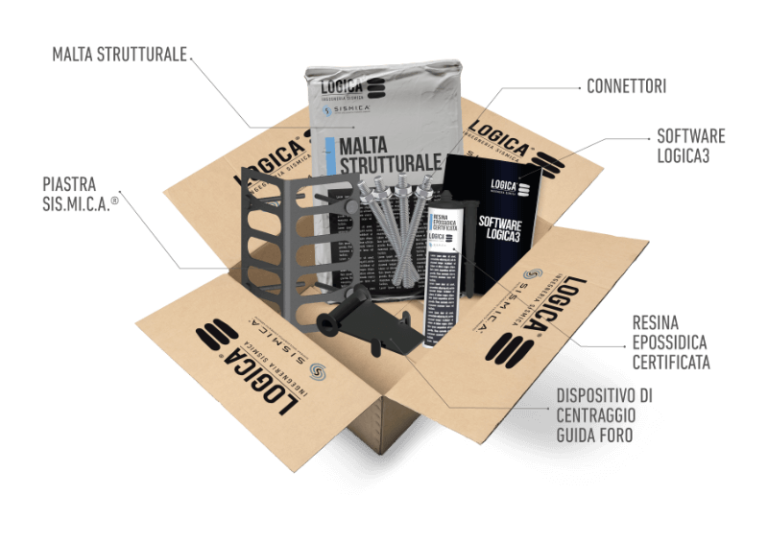
NODE KIT
COMPONENTS
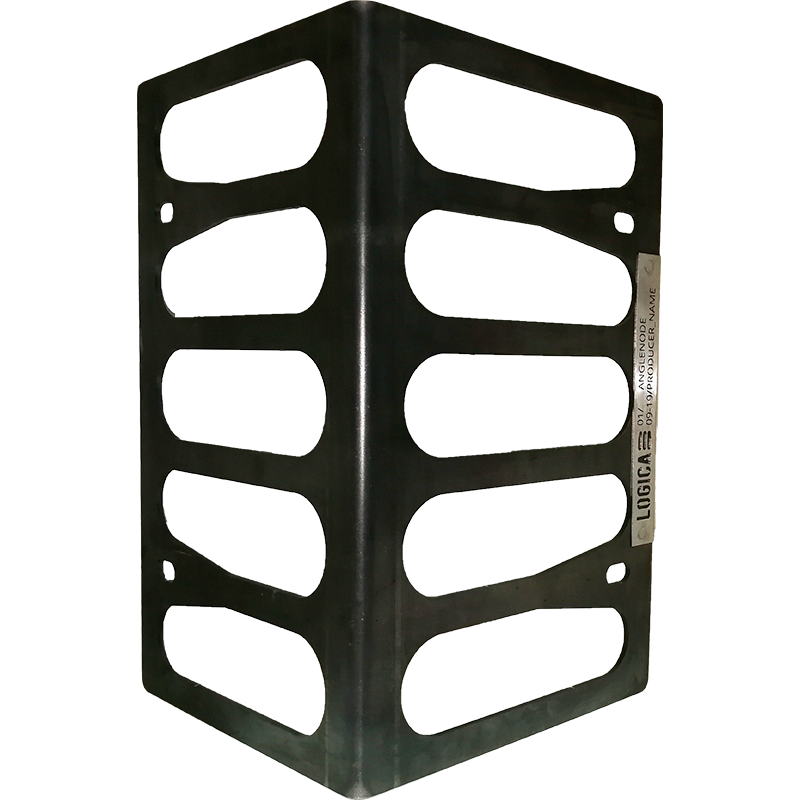
- SIS.MI.C.A.® Plate;
- Connectors;
- Software LOGICA3;
- Hole guide centring device;
- R4 structural mortar;
- C2 Epoxy Resin
FEATURES
- It provides confinement with increased strength and ductility.
- No increase in element geometry and loss of space.
- No increase in mass or element stiffness.
- It does not lead to interruptions in the use of the building.
- Minimal intervention time.
- No aesthetic impact.
ALGORITHM
OF CALCULATION
For each individual structural element in need of reinforcement, the following are calculated:
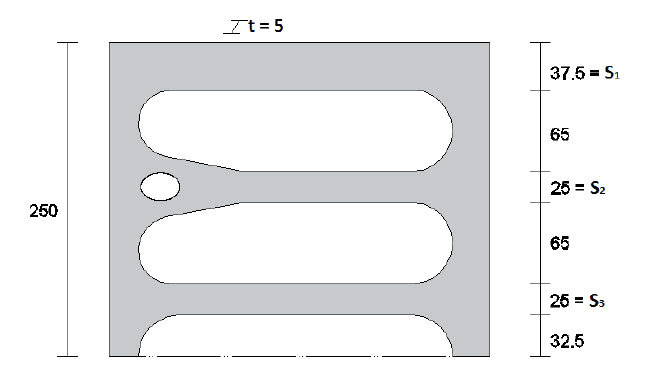
- Insert thickness
- Dimensions
- Window ratio
- Interest in windows
- Engorgement angle
TARGET
THE ENTIRE REINFORCED CONCRETE BUILDING HERITAGE (FROM THE 1950s TO “NTC 2008”)
Public Construction
Sensitive buildings, schools, hospitals
barracks, sports facilities, etc.
Private Construction
Houses, condominiums,
production facilities, etc.
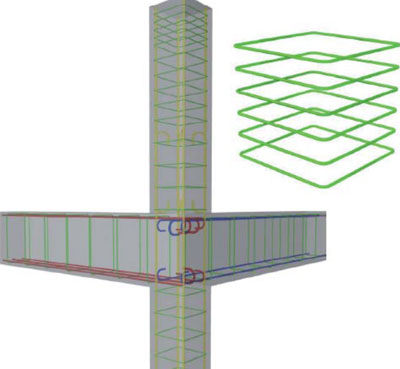
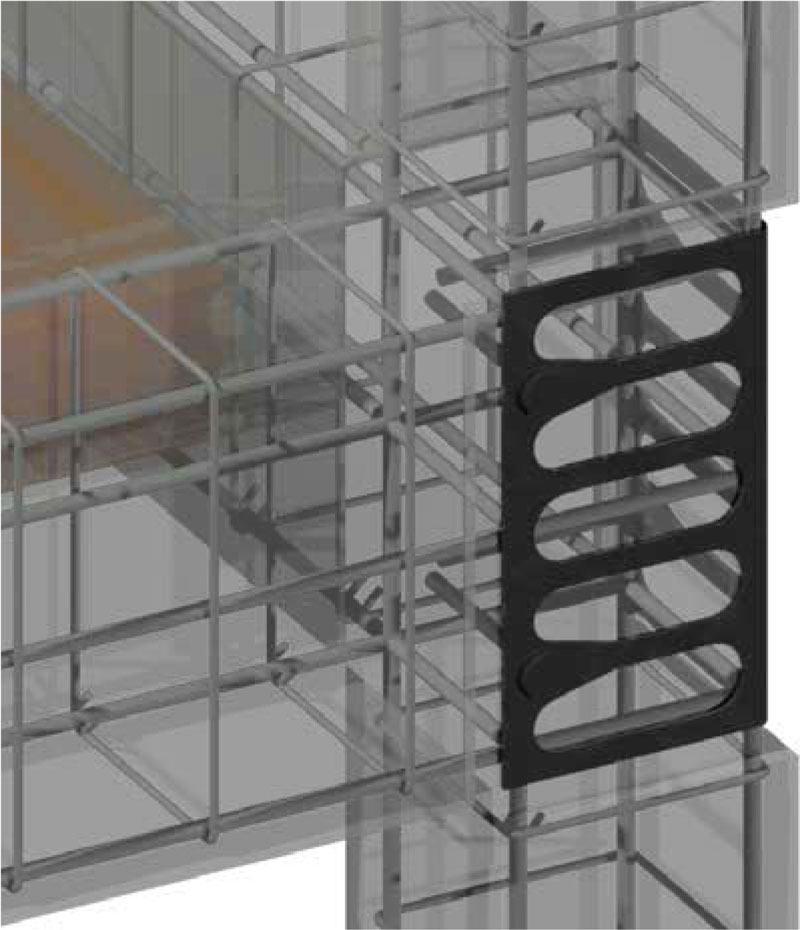
Example
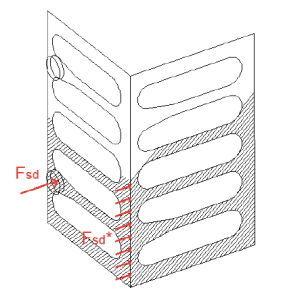
OF THE NODE KIT (THEORY)
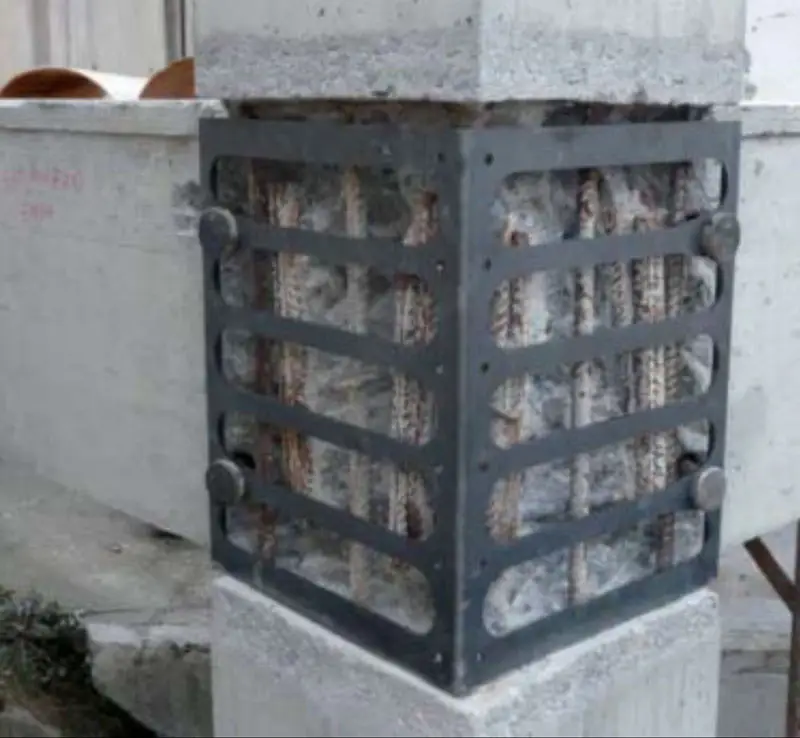
Example
OF THE NODE KIT (PRACTICE)
ADVANTAGES
ANALYSIS OF PROS
ANALYSIS OF PROS
FOR CUSTOMER
Speed of execution.
Possibility of a dry finish (plasterboard, etc.).
Medium/low cost.
Reversible intervention.
Sismabonus tax benefits!
FOR ARCHITECTURAL PROJECTS
Minimal invasiveness due to a limited increase in column thickness.
Architectural merit if left exposed.
FOR CONSTRUCTION MANAGEMENT
Easily controllable.
Simple installation.
Engineered technology.
Labour without the need for special training.
Certified intervention.
FOR STRUCTURAL DESIGNERS
Traditional calculation method validated by the University of Bergamo.
Same material as reinforced concrete (steel).
Increased strength (shear, compression, confinement).
Applicable to pillars, knots and beams.
Increased ductility.
Increase in overall deformation capacity.
Possibility of minimising the alteration of the static and seismic distribution of actions on the structure thanks to the possibility of carrying out the intervention on limited thicknesses.
REGULATORY FRAMEWORK
With the entry into force of the current technical standards for construction, important innovations were introduced regarding the nodes of reinforced concrete structures
INQUIRING
REGULATORY NODES
With the entry into force of the current technical standards for construction issued through Ministerial Decree 17/01/2018, important novelties have been introduced regarding the nodes of reinforced concrete structures in point 7.4.4.2. As known to engineers in the sector, the possibility of designing reinforced concrete structures by assuming their non-dissipative behaviour has been introduced, this aspect can therefore be applied to all the elements constituting the structure avoiding the application of design criteria in capacity. The concept just expressed does not apply to nodes, which must be designed so that their failure occurs last in the hierarchy of elements.
VERIFICATION PHASE
Another important innovation introduced concerns the obligation during the design phase to check the nodes for all reinforced concrete structures, therefore no longer only those designed in CD A but also those designed in CD B and those that are not dissipative (in addition, of course, to all existing constructions when a vulnerability analysis is carried out). In addition, the minimum amount of reinforcement to be placed in the nodes has now been eliminated, specifying that the reinforcement to be placed is the greater of the upper and lower columns. In the case where the nodes are entirely confined, it is left to the designer to double the pitch of the stirrups with respect to that previously identified, with a maximum limit of 15 cm.

NODE BREAKING MUST BE LAST IN THE HIERARCHY

MANDATORY TO VERIFY NODES

ELIMINATED THE MINIMUM AMOUNT OF REINFORCEMENT
INSTALLATION
See the system installation steps.
APPLICATION
STEPS

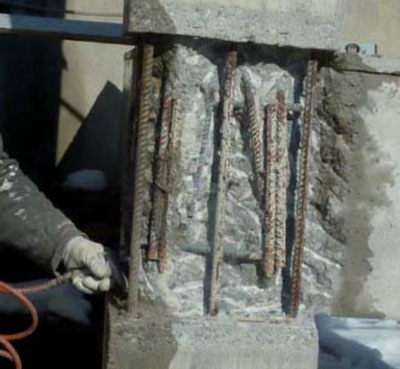
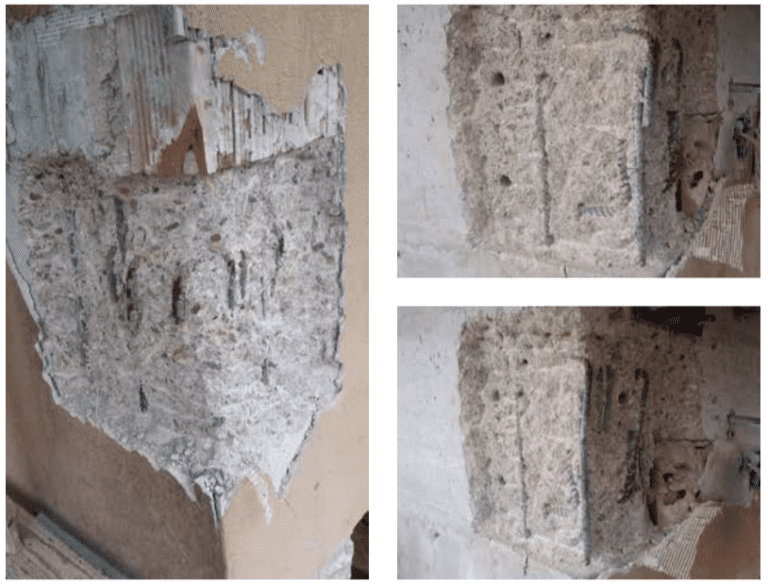
The reinforcements are laid bare and their cleaning and passivation is carried out. Note (in this specific case of a building constructed in the late 1970s) the total absence of stirrups in the nodes, the small diameter of the stirrups of the beams and the 90° hooks of the stirrups of the pillars.
Note the absence of stirrups in the nodes, the smallness of the iron cover and the hooks of the beam stirrups in the node.
After the first phase of locating the reinforcements and making sure that there are no suitable stirrups, the System is installed according to the following procedure.
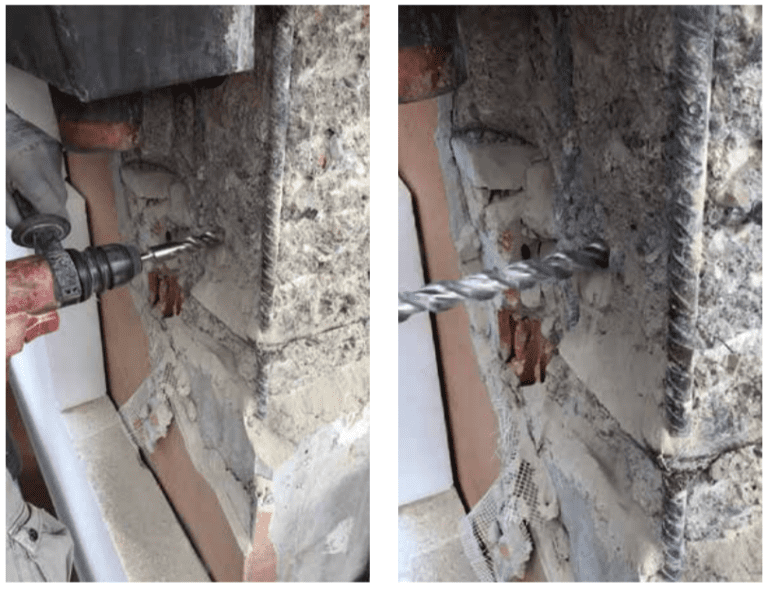
For housing the anchor plugs.
A hole of the specified depth is drilled. Cleaning and removal of the drilling residue is carried out at a later stage.
In the image opposite: Before drilling the concrete, the SIS.MI.C.A.® plate and the hole guide centring device were used as a template to view the positioning and angle of the holes.
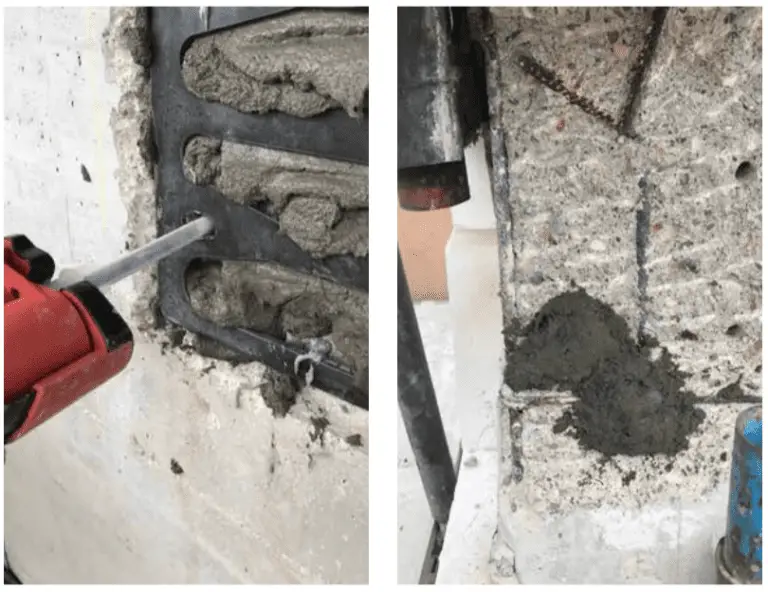
For bedding the SIS.MI.C.A.® plate
Before spreading the R4 structural mortar, wet the concrete surface with water.
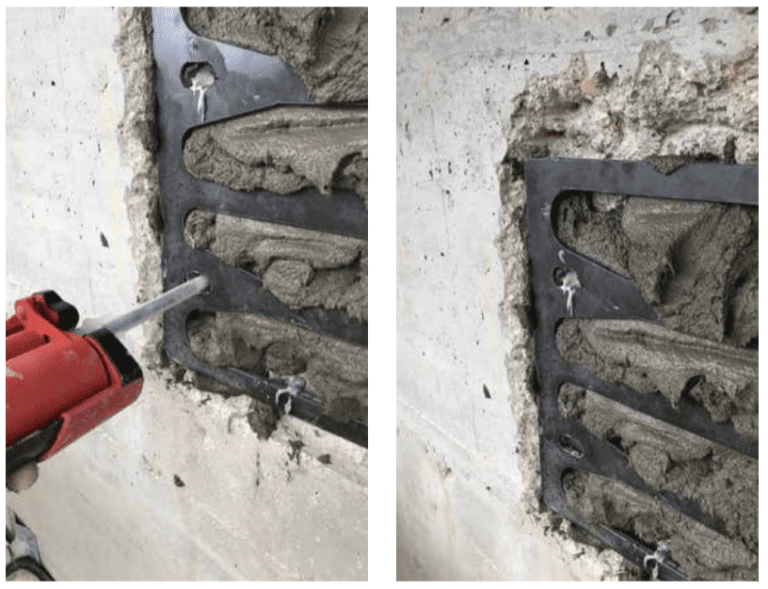
The insert is positioned above the structural element to be reinforced and is provisionally fixed to the reinforcing iron at the corner. This facilitates the drilling phase. The element functions as a guide for the position of the holes to be drilled in the concrete.
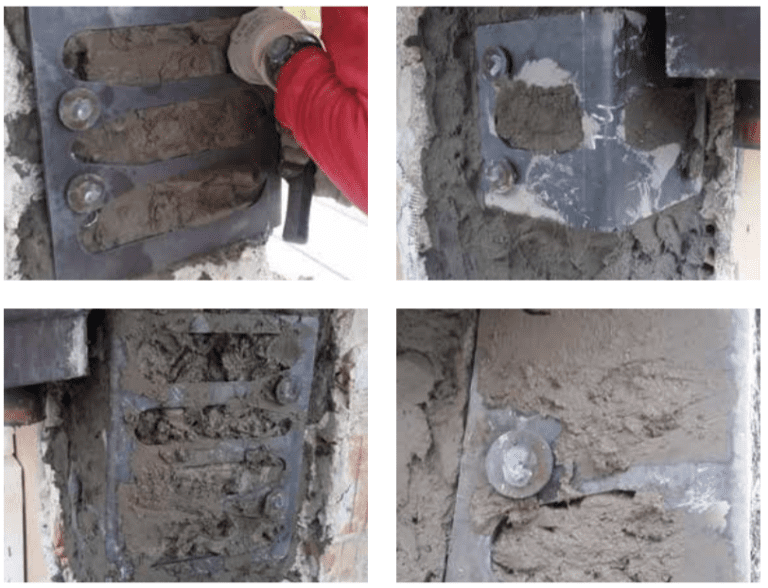
The anchor rods, also dimensioned and calculated using Logica3 software, are inserted inside the holes drilled. Before inserting the C2 epoxy resin, care must be taken to adequately clean the holes.
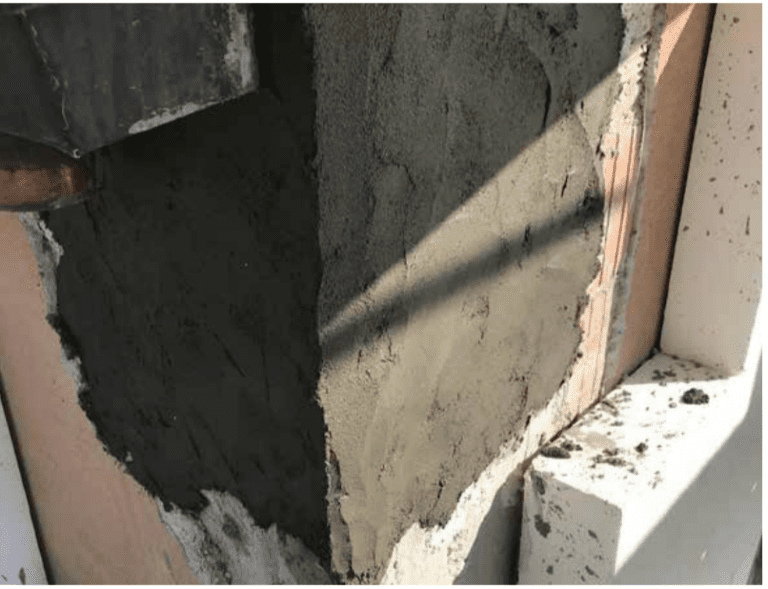
Once the tie-rod fixing operations have been completed, the previously removed concrete cover is restored. The reinstatement is carried out using the R4 structural mortar supplied with the SIS.MI.C.A.® kit and having characteristics specifically designed for specific applications.
The minimum thickness of structural mortar placed on top of the plate must be 15 mm.
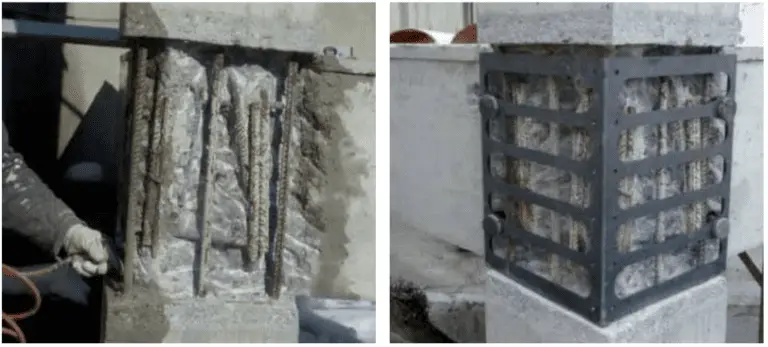
Compared to other reinforcement methods, our systems allow you to achieve remarkable results in a much less invasive way, with reduced intervention times and without interfering with the daily use of the building on which you are intervening, improving the characteristics of reinforced concrete elements with just the addition of one of its two components: steel.
Moreover, the intervention does not require specialised labour!
Restoring the concrete cover makes the reinforcement intervention invisible afterwards without any aesthetic impact on the structure.